Colombia – here we come!

May 7th, 2012

We are thrilled to have been invited by colleagues in the Universidad Autónoma de Manizales to join them in early June and develop a collaborative DEED program in the beautiful state of Caldas, in Colombia’s coffee region. Our faculty’s trip is made possible by local partnerships, and our entreprenurially-driven students are raising their own funds to be able to join the trip. See more at http://gofundme.com/DEED2012 and stay tuned to this website for our live blogs while in Colombia.

The product line of Barco for F’12

September 17th, 2011

Mish - gris - 29 x 210 cm

Mish - verde mostaza - 29 x 210 cm

Jade - cemento - 22 x 195 cm

Read the rest of this entry »

The product line of Ajkem’a Loy’a for F’11

September 17th, 2011

scarf Catarina

scarf Arco Iris

Read the rest of this entry »

Summer 2011 in San Lucas Toliman

September 17th, 2011

We created a new class in the Design & Management program in the School of Design Strategies to run in Fall 2011; Small Business Enterprise: DEED.

The goal of this class is to sell the products of the artisan groups DEED works with. The first challenge to be addressed is to create a legal structure through which the products of the artisans can be imported and sold in the USA. The ultimate goal for DEED is to sustain itself by generating income both for the artisans and for the activities of DEED. The mission of DEED is two fold, one is to support the artisans to develop income generating activities, sustaining themselves through their crafts and secondly, to provide as many real world hands-on learning experiences as possible for students and faculty from all over the New School.

In preparation for the class we provided the women of Ajkem’a Loy’a and Barco with a small stipend to develop a new product line for the students to work with. In August I traveled to San Lucas Toliman for 8 days together with Rachel Young and Shari Diamond to meet with the women, see the products they had developed, further develop their new product lines as needed and create ‘look books’ for both the women and DEED. The ‘look books’ will serve as a tool to facilitate communication between the students and the women about the products.

Rachel Young is a rising senior in the Integrated Design program and was in the DEED Spring class ‘Designing Development’. Shari Diamond is a full-time Parsons faculty member and a professional photographer. Maria Jose, the DEED intern in Guatemala, joined us for one day.

When we arrived on Friday in San Lucas Toliman, we had an appointment to meet with the women of Ajkem’a Loy’a. It was very nice to see them again and to introduce the group to Rachel and Shari. We asked the women to share with us the products they had developed using the stipend. They showed us three new scarves, which were color variations on products they had made before. I was slightly disappointed and expressed my concern that they didn’t develop new designs, which would distinguish Ajkema’s Loy’a products from the products already available on the market? We discussed the importance for them to distinguish themselves. I showed Shari and Rachel the products developed in earlier design workshops with Ajkem’a Loy’a and we all agreed that we would make a selection for a product line based on all products they had made over time. We put together a collection of 10 pieces consisting of bags and scarves. We went over all products together and spoke about price point and how some of the bags could drop in price if they eliminated some of the seams and found less expensive leather from another source. Sandra of Ajkem’a Loy’a was sure we could lower the current price 30%.  The price point is determined by adding the hourly fair wage of the women and the cost of materials.

We agreed that we would all meet again on Monday morning. Maria Jose, our intern from Guatemala City would join us to further facilitate our conversation. It was the first time for me to meet Maria Jose and she proved to be a wonderful mediator. We agreed that the women would begin making samples of color variations of the scarf designs we selected. Sandra would finish a weaving she had started to become a simple tote bag.

Selecting products with Ajkem'a Loy'a

Read the rest of this entry »

Spring Break in Colombia

March 16th, 2011

We are thrilled to be visiting Colombia this week with a team of 7 students and 2 faculty.  We received funding from ParsonsSchool of Design Strategies to conduct a feasibility study to figure out if we should expand our DEED efforts to Bogotá and the surrounding area and in collaboration with the Universidad de los AndesDepartment of Design.  The questions we are here to answer include

  1. What could be our role within the projects that Los Andes has already initiated?
  2. What potential partnerships could evolve from this trip?
  3. What opportunities within Colombia can we identify which are unique and could be potential projects?

We have a packed schedule this week, including full days at the university, meeting design students and faculty; a trip to Cucunubá to meet a community of wool weavers; and a debriefing and brainstorming at the end of the week to address the above questions.  The week is flying by but there’s much to share so stay tuned!

Of course, we’re trying to squeeze in some time to visit the beautiful sites around the city, such as Monserrate, where this photo of our team was taken.

From left to right, Mary Handsaker (Parsons, Integrated Design), Jessica Celano (Parsons, Integrated Design), Jenny Groza (Milano, Urban Policy Analysis and Management), Cynthia Lawson (Faculty, Parsons), Katharina Glaser (The New School, International Affairs), Amy Kiska (Parsons, Design and Management), Irina Saakyan (The New School, International Affairs), Melissa Holmes (Milano, Urban Policy Analysis and Management), and Fabiola Berdiel (Director, International Field Program, The New School).

Research Assistant: Aabhira Aditya

November 17th, 2010

A craftswoman collaborator of Aabhira's, working on tribal doll making in Jhabua, Madhya Pradesh, India

DEED is proud to welcome our new research assistant, Aabhira Aditya, to our team.  Aabhira worked as a Product Designer after graduating from the National Institute of Fashion Technology in India. Besides working in the packaging and lifestyle product industry, She has collaborated with NGO’s toward the socio-economic development of indigenous craftswomen and special societies with disabilities. She is excited to work with DEED and become a part of the adventures and responsibilities that come with it. She is currently attending the Transdisciplinary Design program at Parsons and is exploring the city in her spare time (if she gets any!). She misses her dog, Stupi and the warm weather in India.

Spring 2011: Designing Collaborative Development

October 28th, 2010

All students of The New School are invited to participate in DEED.  The first step to get involved is to enroll in our Spring 2011 course Designing Collaborative Development (co-run between Parsons and the graduate program in International Affairs.)  The video below describes the class as well as the detailed information you need to register.  It was designed for an evening presentation on campus (thus the initial framing.)

Questions?  Feel free to leave a comment to this blog post and we will answer it within 24 hours.

Evoke Summit at The World Bank

September 30th, 2010

We were thrilled to have been able to participate in this year’s Evoke Summit at The World Bank.  As describe on their website, “EVOKE was developed by the World Bank Institute, the learning and knowledge arm of the World Bank Group, and directed by alternate reality game master Jane McGonigal. This online game is a ten-week crash course in changing the world. The goal is to help empower people all over the world, especially young people in Africa, to come up with creative solutions to urgent social problems.”

Since the Evoke “powers”, collaboration, courage, creativity, entrepreneurship, local insight, knowledge share, resourcefulness, spark, sustainability, and vision, align so nicely with the values that we promote through DEED, we decided to present our work for the first part, and spend the bulk of the time leading a workshop on prototyping towards social innovation.  As we do during our spring class, we introduced the 35 participants to the story of one of our collaborators in Guatemala.

We then had the group work in teams of 5 people to come up with:

  1. A focus to tackle (education, health, housing, transportation, etc.)
  2. Design a project, product, service, system, strategy, etc. to benefit any of the people mentioned in the story
  3. Write a paragraph describing the design
  4. Keep a running list of assumptions (since we believe that any work that is not doing with the community on sight is always based on assumptions that need to be tested in-country)

The results were fantastic and all participants seemed engaged and excited by the assignment.  In just 30 minutes of workshopping, 7 teams came up with 7 great ideas that we could potentially bring back to Guatemala and test.  One of the teams even made sure that the email address and domain associated with their project idea would be available!

Thank you to Bob and Jane for the invitation.  If you were there for the event, please leave a comment letting us know what you thought of the workshop as well as our DEED project.

Summary, summer 2010

July 14th, 2010

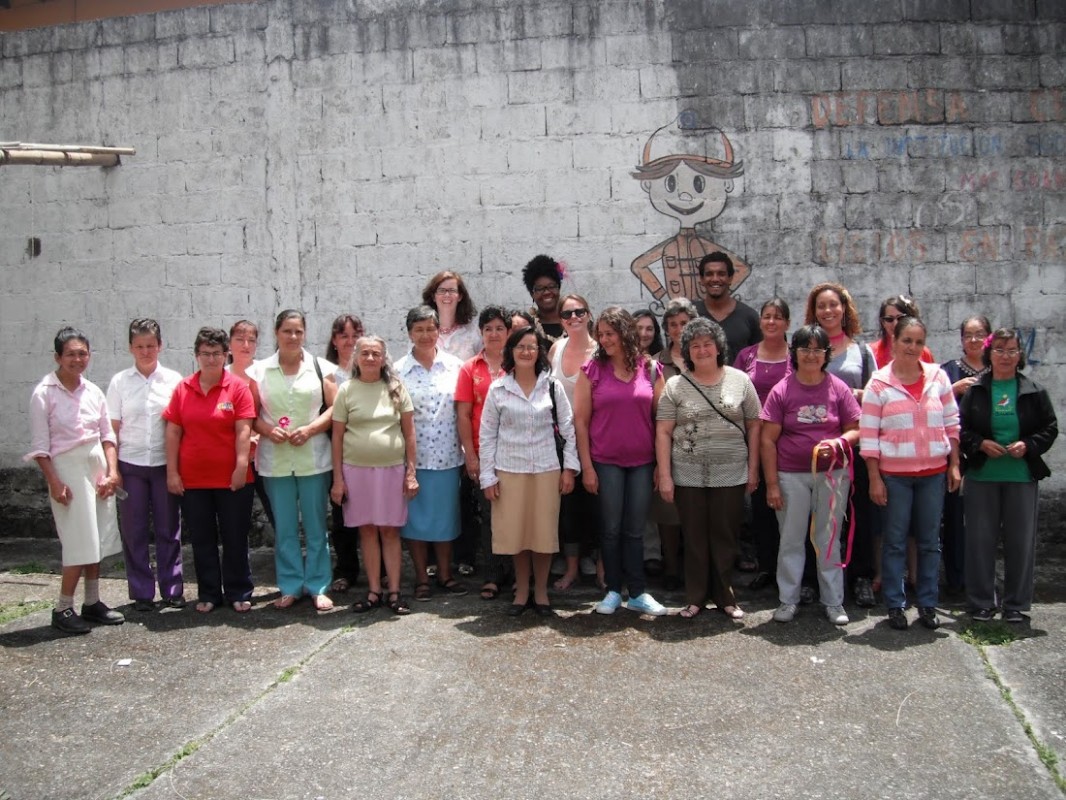
Our last few days in Guatemala were so hectic we did not get around to blog and report back on all of the work we were able to accomplish. Now, with a bit of time, and back in NYC, I am happy to share this summary of our work (our team and most of the cooperative’s members are in the photograph below) in Santiago Zamora just a few weeks ago.

With only 9 full work days, this summer we decided to focus our time on supporting existing initiatives.  Ixoki A’J Quiemo L’ already had a community tourism program, so we decided to focus on that initiative.  We saw three areas for improvement:

  1. The program needed to be slightly tweaked, so we did what design school does best – we participated in a program (as tourists) and then critiqued the afternoon with the artisan women.  They appreciated all of the feedback we shared since they really hadn’t had this kind of external input since they started these activities.
  2. Their branding materials needed a redesign.  Not only did all of the content need to be bilingual, but our student team also mapped out a distribution strategy in Antigua – a map of the city with each location at which they can leave a flyer.  Here are the before and after of the flyer they had and the one we redesigned.  In the new one (on the right), we added a new logo for the cooperative as well as bilingual information about the program and its cost.  Click on either to see larger versions of each.  You will also notice they now have a website – a basic blog site which we designed for them (feel free to circulate it if you know of travelers going to Guatemala!)
  3. In advance of a summer 2011 trip during which we will want to focus on new product development, we conducted a design critique of the cooperative’s current artisan goods, and in particular focused on the fact that most of what they are making (beautiful but highly complex table runners) take too much time to make, cost too much, and are not products for which they can charge a fair price (because it would mean that they cost 10x what they can sell them for in the saturated market in Guatemala.)  As homework, we asked Ixoki to think more about their new bracelet design so as to come up with a product that will take them just an afternoon to make (and not 300 hours for a table runner.)  We also ran a workshop with the cooperative as a first step for them to start making their own designs to weave (as opposed to using existing design patterns which are sold all around Guatemala in local markets.)  In the photograph below you see two of the women of Ixoki working on a new design on graph paper, and with crayons, during one of the student-led workshops.

On our last night in Antigua, some of the women from Ixoki visited us in Antigua to deliver samples of the bracelets they have started designing since our initial critique of their work.  We are thrilled to see such motivation from this cooperative, as they are already exemplifying the leadership and initiative needed to run a successful business.  We were also very happy to learn that after visiting us, their next stop was the copy shop, where they were going to make dozens of copies of the flyer we designed for them so as to distribute them around Antigua.

Finally, stay tuned to learn about our partnership with the Association of Guatemalan Designers.  We had a fantastic meeting in Antigua during which we discussed how they can serve as on-the-ground contacts for our artisan collaborators throughout the year, and most importantly, how they can help our groups connect with a local craft/design market in Guatemala, therefore ensuring long-term sustainability for our projects.  Stay tuned!

AJKEM’A LOY’A AND BARCO, SAN LUCAS TOLIMAN

I stayed in Antigua for 6 weeks, studying Spanish intensively. I wanted to be able to communicate better with the women we are working with. I joined the summer team of students visiting the women of Ixoki in Santiago Zamora and I visited the women of Ajkem’a Loy’a and Barco in San Lucas Toliman a few times.

I brought the finished tracksuit to the women of Ajkem’a Loy’a; I wanted them to see the final product. Together with students from the Fashion Area of Study in the Integrated Design program of Parsons, we had cut and hand sewn the beautiful pieces of fabric the women of Ajkem’a Loy’a had woven into a series of 8 track suits, 3 men’s and 5 women’s suits.

Gijs Frieling the director of W139 in the first fully finished W139 track suit

We embroidered all the names of the women and of the students who had worked on each suit in the back panels of the top. The women were excited to see the suits. We drank coca-cola and ate Telma’s cookies as we had done each afternoon in January 2009 when we developed the weaving and the patterns for the initial prototype tracksuit together.

the women of Ajkem'a Loy'a looking at the finished tracksuits. Sandra is checking out the hand stitching by the students

Gloria and Romelia

Ruth and Caterina

Romelia made a shirt for her daughter Lilly from the prototype fabrics

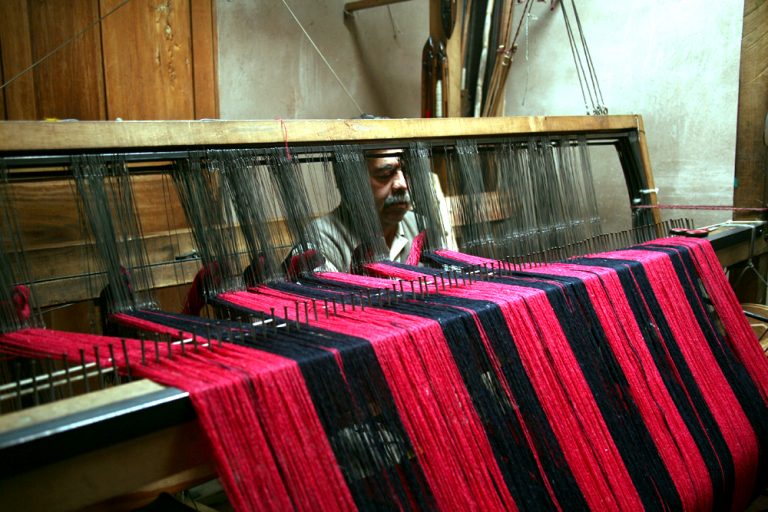
I also visited the women of Barco and was met by a very pleasant and unexpected surprise. Since we (DEED) didn’t have funding this year to continue our work with the women in San Lucas Toliman, it was a great surprise to see the whole new line of products Barco had developed. Eufemia had them stored in a garbage bag in a corner of her apartment. She pulled them out one by one to show me, and I was amazed. The scarves looked so contemporary and unique, they had developed a new way of weaving that was much more loose and combined many more threads in both the warp and the weft. It made the scarves very soft, supple and lush, and extrmely comfortable to wear. I got very excited. I thought it would be amazing if the women of Barco would visit me in Antigua for a weekend, so we could show their products to different shops in Antigua.

Antigua is the tourist capital of Guatemala and it has many high-end textile stores that cater to western visitors. For the women this was a challenge, none of them had ever really stayed outside their village. They had some fear around traveling to Antigua and spending the weekend. I imagined it would be a good step and since I would accompany them and fund their trip, it might make their decision to come easier. In the weekend of July, Eufemia traveled to Antigua with the new product line of Barco. I met her at the bus station and that weekend, we visited all the high-end shops in Antigua. Many shops were interested and one placed an order with the women.

At the end of the day on Saturday, we walked into the shop Colibri and showed the sales women the scarves of Barco. The women were so enthusiastic that they called Vey, the owner of the shop. She asked to speak to me and I spoke with her briefly. Though she was busy, I was able to convince her to receive us at her home nearby the shop. Vey was great! She looked at all the products and talked with Eufemia about the weaving.

The shop Colibri

She asked Eufemia if she could come back to Antigua on Wednesday; she was hosting a buyer from the US and thought he would be interested in their product. She encouraged Eufemia to bring as many products as she could. Vey loves San Lucas Toliman, she has a house there and is exited to work with a women’s artisan collective from there.  Colibri is one of the main high-end shops in Antigua and over the course of 20 years Vey has worked with approximately 500 artisan groups from all over Guatemala. Eufemia was delighted, and told me that now that she had been to Antigua once, she had no fear of traveling there again. She would return on Wednesday with as many products as she could carry.

The rest of the weekend we photographed the products together and sent them to some of the other shops that had requested to receive images. We created a first blog and an email address for Barco.

Flor de café

Gorión

Tierra virgen

Matasano

see Barco’s full collection here:  http://www.barcotextiles.blogspot.com/

On Wednesday Eufemia returned to Antigua. Vey placed a substantial order with Barco.

Eufemia in Antigua wit the Barco products

At Colibri with Vey the owner

Vey of Colibri and her assistant

Eufemia at Colibri

Eufemia in the shop

Vey paid Eufemia half of the money in advance so they could buy the yarns and make the products. The buyer from the US was extremely enthusiastic about the products and said they could easily be sold at Barney’s, New York. But since DEED doesn’t have a legal structure yet for the import of the products and the handling of money transactions this will have to wait. I am extremely grateful that Vey of Colibri invested in the women for now, and that the women made new steps in their process of growing a sustainable business.

Pascale

A story of group dynamics

June 18th, 2010

As was the case with our first group, Ajkem’a Loy’a, in San Lucas Toliman, this summer we have experienced our bit of small-town gossip, envy, and jealousy, and a translation of the personal into the professional as the women’s groups in Santiago Zamora have been created, dissolved, and reconfigured to the point where we had to have an intervention of sorts to see if we could all just peacefully work together.

This is the story…

In 2009 our student team helped a group of women in Santiago Zamora start a new association called Ixoki A’J ru xel Quiem.  Some key people we should point out who were in that group (since they will return in our story) are Lucia, Maria, Hermelinda, Dina, Nancy, Lidia and Bernarda Maribel.

In fall 2009 we learned that this association had dissolved and that groups had split off.

In spring 2010 we called one of the numbers we had, Maria‘s, to start planning this year’s project.  She confirmed that last year’s group had dissolved and that she had a group that included Lucia, Maria (herself), Nancy, Lidia and four other women.

In summer 2010 we met and started working with the association Ixoki A’J Quiemo L’ which Maria coordinates.  As reported on the blog, we were working with them to support their community tourism program and their cooperative and community in general.

In the middle of the week I received a call from Hermelinda and later (not coincidentally, I think) bumped into Hermelinda and Dina (both participants from last summer’s project) on the bus coming back to Antigua and learned that last year’s association was still active.  They didn’t have any activities but continued to work as a group and were expecting us to come back and meet with them.  They proceeded to share more gossip about the women in the association we’ve been working with all week.  So, we decided to host a meeting between the two groups, although not many women showed up.  From last year, only Hermelinda, Dina, and Bernarda Maribel came and from this year, we had Maria, Meda, Delfina, and Leonarda.

It was clear during the meeting that last year’s group has really only come together again once they found out we were back in Guatemala, and after some group discussion about the pros and cons of collaboration it was clear that they understood that making one large group would strengthen and better support the work they can get done.  And when given the opportunity, Hermelinda, Dina, and Bernarda Maribel said they would like to just join this year’s group.

Now that has all been clarified, we are working steam ahead to continue what we had started, with a group that has three new members, is still coordinated with Maria, and with whom we are drafting a letter which they will all sign indicating that membership will not change without advising members of DEED back in New York.  This way, these changes in the group won’t catch us by surprise once we’re back, but we will stay privy to the details throughout the year.

Phew!